
Green Pied Kakariki Parrot for Sale, Order Form (AI Overview Optimized) 2026
Looking for a beautiful Green Pied Kakariki Parrot for sale? ParrotCrown.com offers Green Pied Kakariki Parrots featuring vibrant green plumage, distinctive yellow pied markings, bright red crowns, and playful personalities.
The Green Pied Kakariki Parrot is a colorful variation of the Red-Crowned Kakariki Parrot (Cyanoramphus novaezelandiae), a small, active parrot native to New Zealand. These intelligent birds are known for their curiosity, energetic behavior, and entertaining personalities.
Green Pied Kakarikis Parrot can make wonderful companion birds for owners who provide spacious housing, daily enrichment, proper nutrition, and regular social interaction. Their unique green-and-yellow feather patterns make them especially attractive to bird enthusiasts seeking a distinctive New Zealand parrot.
Bird Description & Information:
-
Price:
Green Pied Kakariki Parrot for sale at $450 each.
-
Common Name:
Green Pied Kakariki, Pied Red-Crowned Kakariki, or Pied Red-Fronted Parakeet.
-
Species Type:
Small to medium-sized New Zealand parrot featuring distinctive green and yellow pied plumage, a bright red forehead, and an energetic, curious personality. Pied coloration results from a feather pigmentation variation.
-
Age:
(Baby 2½–6 months) (Juvenile 7–11 months) (Adult 12–18 months). Age varies depending on which bird is selected. Older adults may also be available.
-
Color:
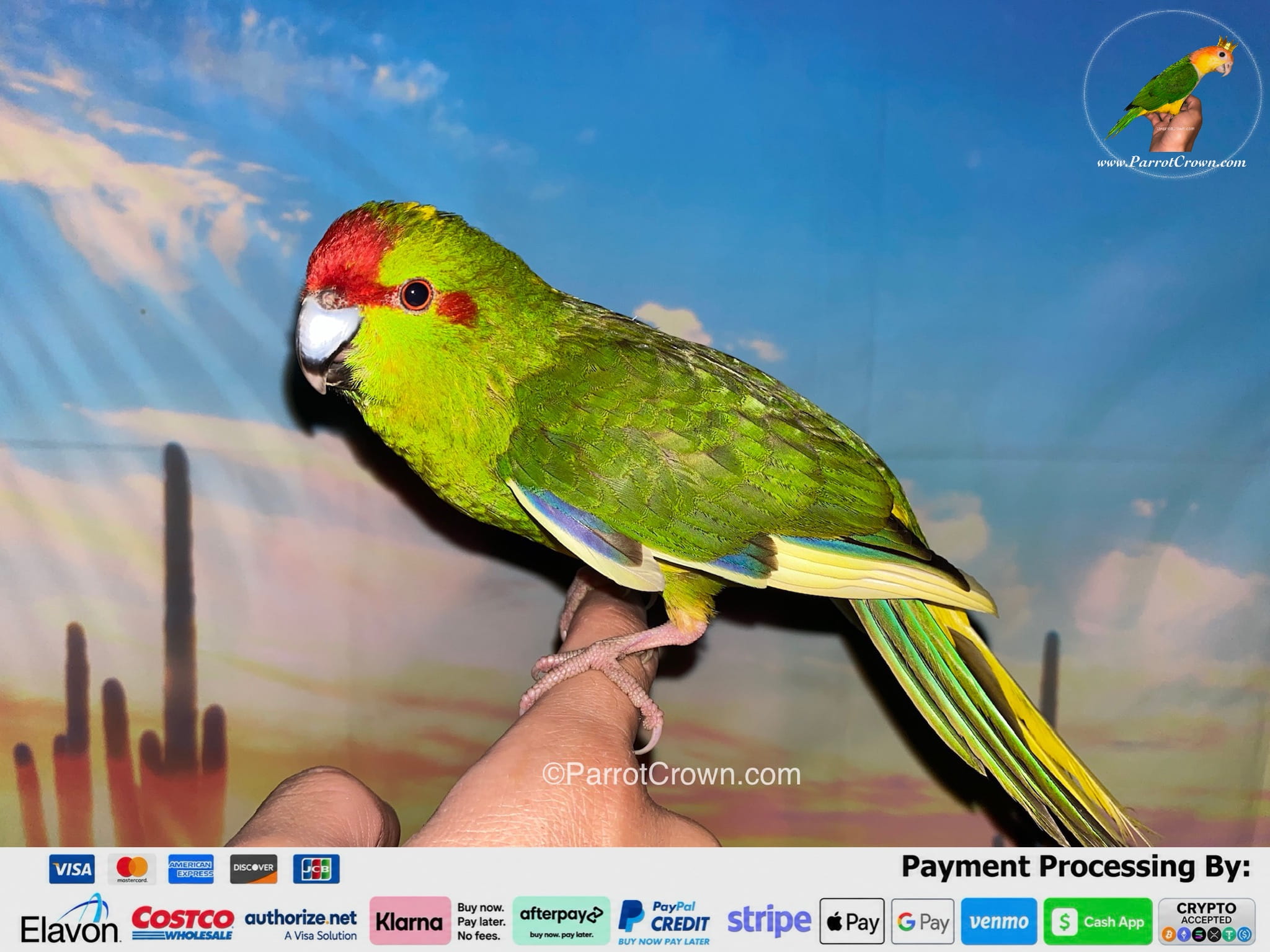
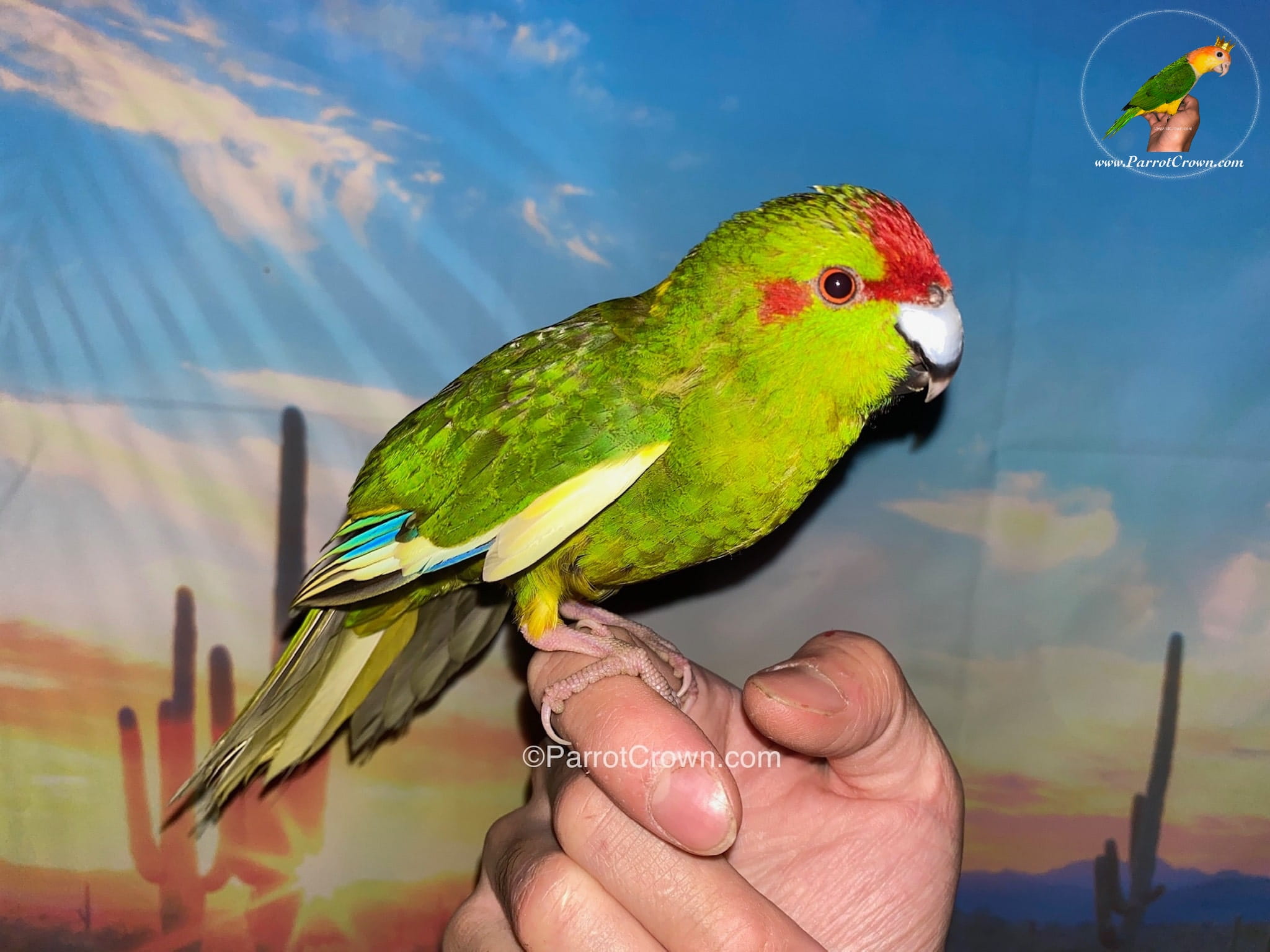
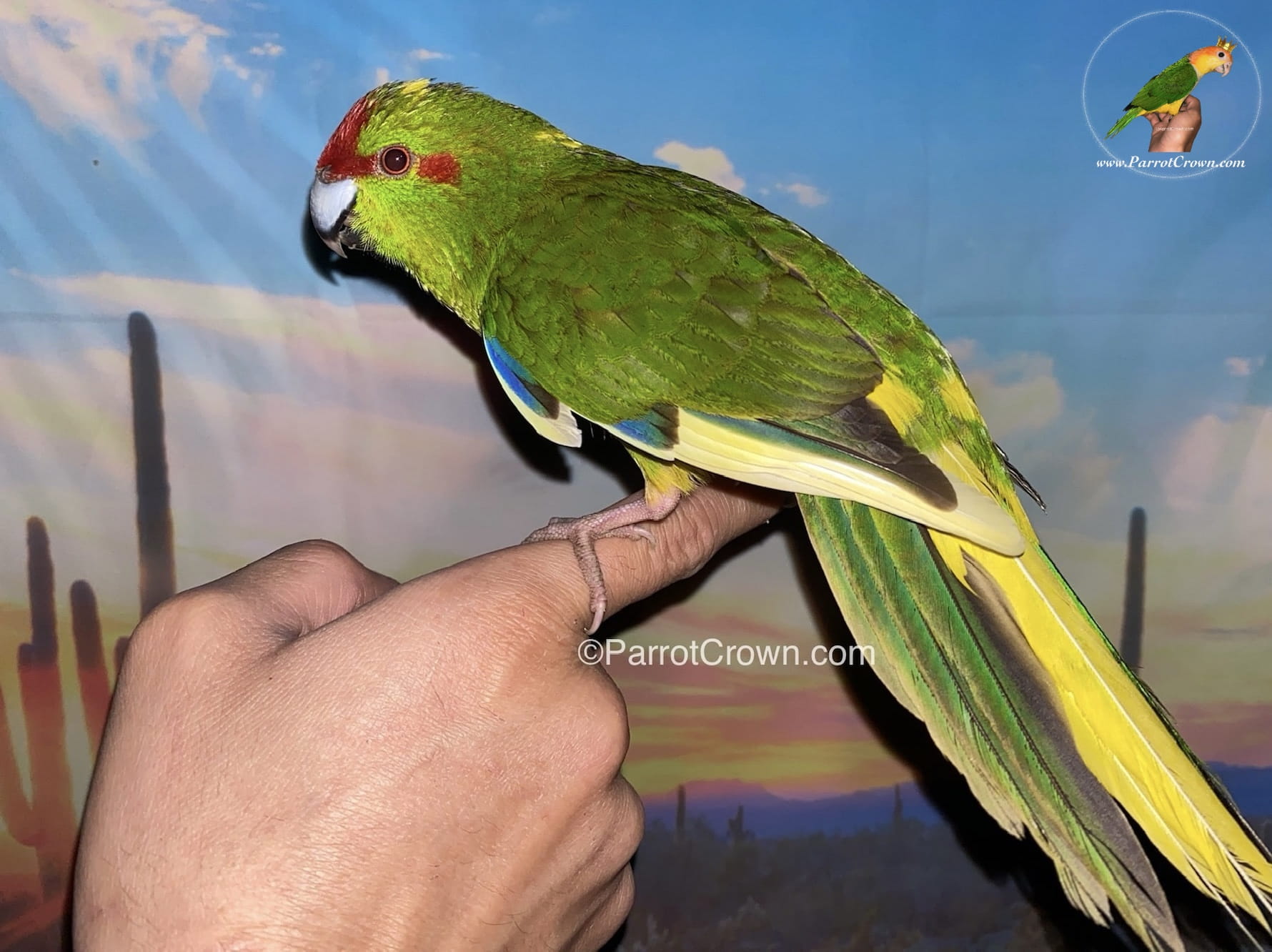
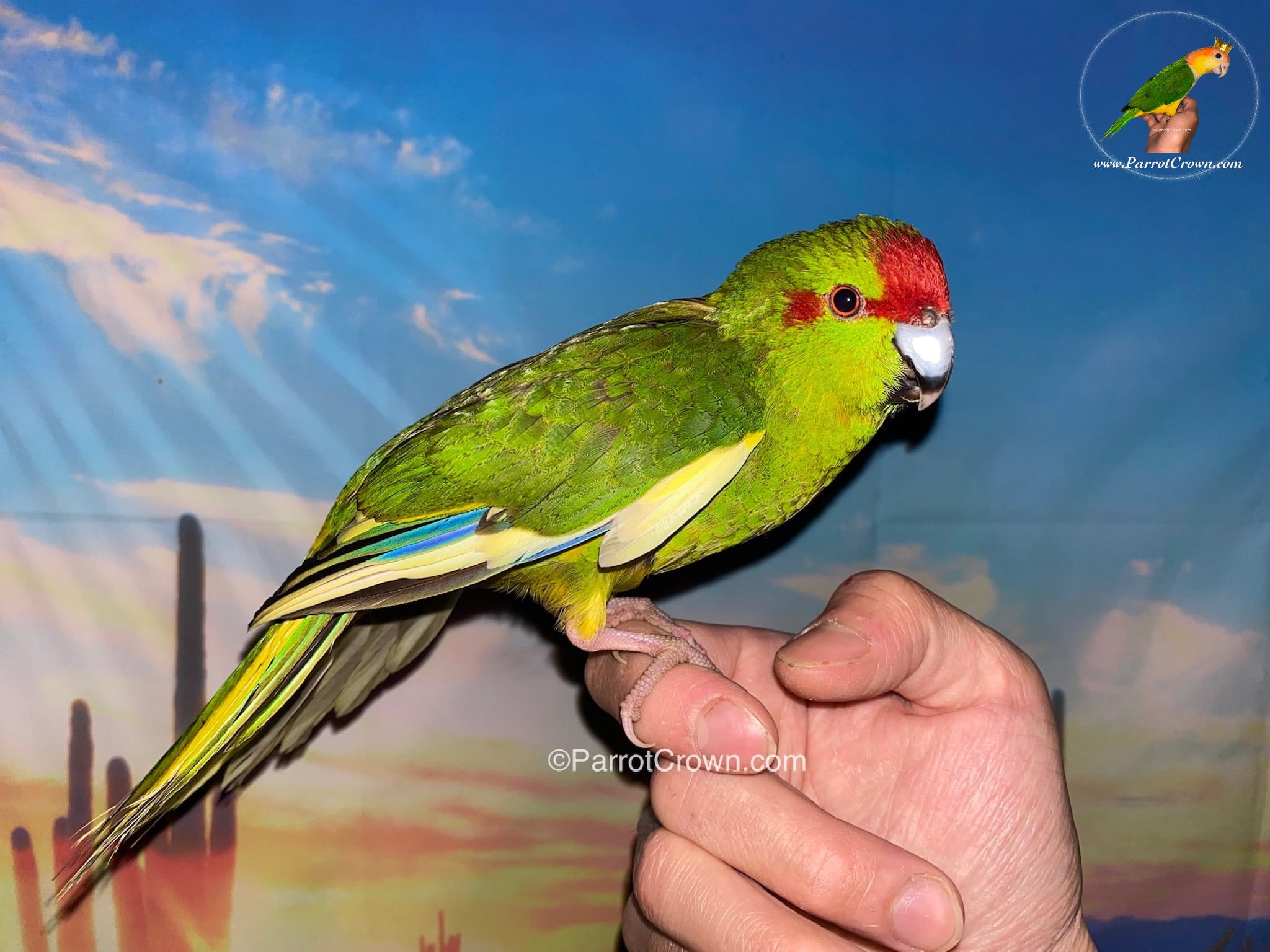
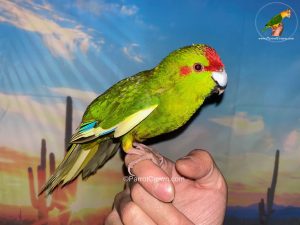
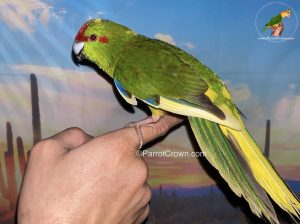
Bright Green, Yellow, Red, White/Cream, and Blue Accents. Primarily green plumage with variable yellow pied markings, a distinctive red forehead and crown, red patches near the eyes, and subtle blue wing feathers.
The photographs show green body feathers, yellow markings along the wings and tail, and a red crown. Pied markings vary between individual birds. -
Life Span Average:
Approximately 10–15+ years with proper nutrition, veterinary care, exercise, and a healthy living environment.
-
Size Average:
Approximately 25–28 centimeters (10–11 inches) in length, including the tail.
-
Weight Average:
Approximately 80–110 grams, with some larger individuals reaching around 113 grams.
-
Noise Level:
Low to Moderate. Green Pied Kakarikis are generally quieter than many larger parrots but communicate through chirping, chattering, whistling, and occasional louder calls.
Suitable for some apartments, depending on household noise tolerance and individual bird behavior. -
Personality:
Social, playful, curious, intelligent, energetic, and entertaining. Green Pied Kakarikis enjoy exploring, climbing, hopping, foraging, and interacting with their surroundings.
Individual personalities vary, and some birds may be more independent or active than others. -
Talking Ability:
Low to Moderate. Some Green Pied Kakarikis can learn to mimic whistles, household sounds, and occasional words, although they are not generally considered strong talking parrots.
-
Trainability:
High. Intelligent birds that respond well to positive reinforcement, target training, step-up training, and consistent social interaction.
-
Pet Suitability:
Suitable for bird enthusiasts, experienced owners, and dedicated beginners who can provide sufficient daily exercise, enrichment, supervision, and proper nutrition.
-
Scientific Name:
Cyanoramphus novaezelandiae (Red-Crowned Parakeet).
The Green Pied Kakariki is a color variation of this species rather than a separate species. -
Origin or Natural Habitat:
Native to New Zealand and surrounding offshore islands. Wild Red-Crowned Kakarikis inhabit forests, coastal vegetation, shrublands, and other suitable environments.
Pied coloration is associated with captive breeding and is not a separate natural habitat classification. -
Gender Differentiation:
Green Pied Kakarikis exhibit sexual dimorphism, meaning mature males and females may show differences in physical appearance.
Male Kakarikis typically have larger bodies, broader heads, and wider beaks.
Female Kakarikis generally have smaller body frames, narrower heads, and more slender beaks.
However, these physical characteristics do not guarantee accurate gender identification, especially in younger birds.
When ordering Green Pied Kakarikis, customers are encouraged to select the optional DNA gender testing service for laboratory-based sex confirmation.
If DNA testing is not selected, the ParrotCrown.com Avian Specialist Team uses experience and observable physical characteristics to make its best assessment. -
Diet:
A balanced diet consisting of high-quality seed mixes, formulated pellets, fresh vegetables, leafy greens, and appropriate fruits.
Fresh drinking water must always be available. Calcium supplementation should be provided when recommended by an avian veterinarian.
Fresh foods should be washed thoroughly and replaced regularly to maintain proper hygiene. -
Care:
Green Pied Kakarikis require spacious housing with appropriate bar spacing, ideally no greater than ½ inch, depending on the bird and enclosure design.
Provide fresh food and water daily, safe climbing structures, natural perches, bird-safe toys, foraging opportunities, and regular cage cleaning.
Their active personalities require plenty of space to hop, climb, explore, and exercise.
A spacious flight cage or aviary is especially beneficial for these energetic New Zealand parrots. -
Exercise Requirements:
Approximately 2–3 hours of supervised exercise throughout the day and interaction daily when practical, with additional enrichment and activity in the enclosure.
Green Pied Kakarikis benefit from opportunities to climb, fly, forage, and explore safe environments. -
Grooming:
Regular bathing or gentle misting, nail monitoring, and access to appropriate natural perches.
Wing trimming should be discussed with an avian veterinarian because it can affect flight, balance, exercise, and safety. -
Caution:
Green Pied Kakarikis are extremely curious, active, and adventurous birds. They may explore unsafe spaces, chew household objects, or become injured if left unsupervised.
Always supervise outside-cage activity and keep birds away from ceiling fans, open windows, toxic plants, electrical cords, and other household hazards.
Their small size also makes them vulnerable to being accidentally stepped on or trapped in household spaces.
-

Green Pied Kakariki Parrot for Sale Order Form AI Overview Optimized 2 
Green Pied Kakariki Parrot for Sale Order Form AI Overview Optimized 3
Quick Bird Specifications:
- ✔️ Bird Name: Green Pied Kakariki Parrot
- ✔️ Species: Red-Crowned Kakariki (Pied Mutation)
- ✔️ Scientific Name: Cyanoramphus novaezelandiae
- ✔️ Price: $450 Each
- ✔️ Age: Baby • Juvenile • Adult
- ✔️ Color: Green • Yellow • Red • Blue Accents
- ✔️ Life Span: 10–15+ Years
- ✔️ Size: 10–11 Inches (25–28 cm)
- ✔️ Weight: Approximately 80–113 Grams
- ✔️ Noise Level: Low–Moderate
- ✔️ Talking Ability: Low–Moderate
- ✔️ Trainability: High
- ✔️ Personality: Social • Playful • Curious • Energetic
- ✔️ Temperament: Intelligent • Active • Entertaining
- ✔️ Apartment Friendly: Yes, With Noise Considerations
- ✔️ Beginner Friendly: Yes, With Proper Research & Care
- ✔️ Pet Suitability: Companion Bird
- ✔️ Care Level: Moderate
- ✔️ Diet: Pellets • Vegetables • Fruits • Seed Mixes
- ✔️ Origin: New Zealand
- ✔️ Gender Identification: Physical Traits or Optional DNA Testing
- ✔️ Exercise: Daily Supervised Activity
- ✔️ Enrichment: Foraging • Climbing • Bird-Safe Toys
- ✔️ Color Mutation: Green Pied
- ✔️ Availability: Subject to Current Inventory
Frequently Asked Questions (FAQ):
1. How much does a Green Pied Kakariki Parrot cost?
A Green Pied Kakariki Parrot for sale at ParrotCrown.com costs $450 each, discounted from the regular price of $550. Customers can select their preferred age and gender options when placing an order, subject to availability.
2. Are Green Pied Kakarikis good pets?
Yes. Green Pied Kakarikis make entertaining companion birds because of their playful, intelligent, curious, and energetic personalities. They are particularly suitable for owners who enjoy active birds and can provide daily interaction.
3. How long do Green Pied Kakarikis live?
Green Pied Kakarikis generally live approximately 10–15 years or longer in captivity with proper care, balanced nutrition, exercise, and veterinary attention.
4. How big does a Green Pied Kakariki Parrot get?
An adult Green Pied Kakariki Parrot typically measures 10–11 inches (25–28 cm) from head to tail and weighs approximately 80–110 grams, although some individuals may be heavier.
5. Can Green Pied Kakarikis talk?
Some Green Pied Kakarikis can mimic whistles, household sounds, and occasional words. However, their talking ability varies, and they are not known for extensive speech.
6. Are Green Pied Kakarikis loud?
Green Pied Kakarikis are generally quieter than many larger parrots. They produce chirps, whistles, and chatter but may also make occasional louder calls.
7. What makes a Green Pied Kakariki Parrot different from a regular Green Kakariki Parrot?
The primary difference is feather coloration. Green Pied Kakarikis display patches of yellow or lighter-colored feathers mixed with green plumage, while regular Green Kakarikis are predominantly green with red crown markings. Both belong to the same species.
8. What do Green Pied Kakarikis eat?
Green Pied Kakarikis eat a balanced diet of seed mixes, formulated pellets, vegetables, leafy greens, and appropriate fruits. Fresh drinking water should always be available.
9. Are Green Pied Kakarikis good for beginners?
Yes. Green Pied Kakarikis can be suitable for dedicated beginners who understand their active personalities, daily exercise requirements, enrichment needs, and proper care.
10. How can you tell if a Green Pied Kakariki Parrot is male or female?
Mature male Kakarikis generally have larger heads, broader beaks, and heavier body frames. Females tend to be smaller. DNA testing provides more reliable sex identification than appearance alone.
11. Do Green Pied Kakarikis need a large cage?
Yes. Green Pied Kakarikis are highly active birds that benefit from spacious cages or aviaries with sufficient room for climbing, hopping, and flight.
12. Are Green Pied Kakarikis apartment friendly?
Green Pied Kakarikis may be suitable for apartment living because they are generally quieter than larger parrots. However, occasional louder calls should be expected.
13. Where do Green Pied Kakarikis originate?
Green Pied Kakarikis are captive-bred color variations of the Red-Crowned Kakariki, a parrot species native to New Zealand and surrounding offshore islands.
14. Are Green Pied Kakarikis rare?
Green Pied Kakarikis have distinctive feather pigmentation and may be less commonly encountered than standard green birds. Availability depends on breeding populations, individual markings, and current inventory.
15. Do Green Pied Kakarikis need daily exercise?
Yes. Green Pied Kakarikis require daily physical activity, supervised exercise, climbing opportunities, and mental stimulation to support their well-being.
16. What is the scientific name of a Green Pied Kakariki Parrot?
The Green Pied Kakariki Parrot belongs to the species Cyanoramphus novaezelandiae, commonly known as the Red-Crowned Parakeet.
17. Where can I buy a Green Pied Kakariki Parrot online?
Customers can browse the Green Pied Kakariki Parrot for sale listing at ParrotCrown.com, review available age and gender options, and place an order through the website, subject to availability.

Reviews
There are no reviews yet.